RF Microneedling vs. Microneedling: What’s the Difference? [Mary Ann Faulhaber, Aesthetician, Portland]


 RSS Feed
 What’s the difference between traditional microneedling and RF microneedling?
Medical aesthetician Mary Ann Faulhaber explains how both treatments improve skin texture, tighten lax skin, and stimulate collagen.
Read more about Portland aesthetician Mary Ann Faulhaber
Follow Mary Ann on Instagram @maryann__f
Where Before Meets After brings credible, accurate information about plastic surgery, aesthetic procedures and treatments to the researching audience from trusted plastic surgeons and aesthetic professionals.
For more information about being a guest or sponsor of Where Before Meets After, visit wherebeforemeetsafter.com. If you're a doctor or an aesthetic professional and have ever thought about doing your own podcast, you can try podcasting for free on our Meet the Doctor podcast.
Schedule your recording session at meetthedoctorpodcast.com.
Where Before Meets After is a production of The Axis
Eva Sheie (00:00):
You're listening to Where Before Meets After. You do two different kinds of microneedling at MD Beauty Lab. Can you tell us what both of those are and how they're different?
Mary Ann (00:12):
So you have general microneedling, right? It's a SkinPen microneedling. And that is taking a bunch of tiny little cluster of needles to very, very rapidly puncture the skin in and out. It's kind of using a motor to vibrate the needles against the skin. So it's causing little micro injuries in the tissue to essentially trigger our own healing response to replenish that damaged tissue with healthier collagen and elastin. So it's really great for retexturizing the skin, minimizing pore size, fine lines, wrinkles, even scarring as well.
Eva Sheie (00:51):
Dark circles?
Mary Ann (00:52):
It wouldn't be my first choice for reducing pigment, but yeah, there is a little bit of a benefit to kind of reduce hyperpigmentation or discoloration to the skin. And it's a great way to kind of build collagen around that under eye to kind of make it a little bit thicker rather than that thinner skin. So can reduce dark circles around the eyes? Yes. General microneedling because it is using that rapid SkinPen to penetrate the skin does get a little bit more pinpoint bleeding to happen. Used to be called the vampire facial because you do get a lot of nice bleeding to happen. And then a step up from that general microneedling would be RF microneedling. So our silver is a device that we have at MD Beauty Lab and it's absolutely amazing for still that benefit of retexturizing the skin because it does have that little cluster of needles, but it's a different mechanism.
(01:44):
So the needles are going very cleanly in and out of the skin before it's being moved to another area. And then when the needles go into the skin, a burst of radio frequency wavelengths are heating up the tissue to around 42 degrees Celsius. So it's really warm. It is energy but it presents as heat. When the needles go into the tissue and heat up the skin to around 42 degrees Celsius, it triggers a metabolic reaction to cause more of a tightening and lifting to happen. So we're getting that retexturizing, minimizing pore size and fine lines as well as a dramatic lift and tightening to happen. Really great for that lower face and that kind of jowls and laxicity that we're seeing there. One thing that's great about our Sylfirm and that I absolutely love that I haven't really seen in other RF devices is we can actually go super, super shallow within our needle depth.
(02:39):
The most shallow that I've really seen around 0.3 millimeters. So it's really great for kind of getting that under eye and like upper lid so we can safely treat that lid to kind of give it a really nice tightened lift to your brow.
Eva Sheie (02:55):
0.3 millimeters is tiny.
Mary Ann (02:58):
Teeny, tiny. Yeah.
Eva Sheie (02:59):
That's just barely the surface, right?
Mary Ann (03:02):
Yeah.
Eva Sheie (03:03):
That's fascinating.
Mary Ann (03:05):
Really cool.
Eva Sheie (03:07):
So you can hit any part of the face with it?
Mary Ann (03:09):
Oh yeah. It ranges from 0.3 millimeters to three millimeters. So if you ever wanted to treat body, which I've done before like cellulite or lacticity above the knees, it's really great for as well. We can go a little bit deeper for those more thicker areas. Really great for reducing stretch marks as well to like the abdomen. I've even done breast stretch marks as well. We want to make sure we're safely treating that area of course, but kind of helps again just soften up that texture to the mark.
Eva Sheie (03:48):
Would you use it on scars?
Mary Ann (03:50):
It's amazing for scars, especially post-procedure scars like your tummy tucks or breast lifts or anything like that.
Eva Sheie (04:00):
How soon after surgical scar or any kind of plastic surgery incision can you start treating with microneedling?
Mary Ann (04:10):
It is really great to treat your scars as they're healing to kind of promote even better healing and to break up that scar tissue that's forming. But of course we'd always want to advise your doctor to make sure it's safe to treat.
Eva Sheie (04:24):
If I'm coming for standard microneedling, is that like a one-time treatment or do you usually do a series?
Mary Ann (04:31):
Series of three is like a great way to start with your microneedling. I always say we're working against age, environment, genetics even, and we're working on a cellular level. We're kicking in that healing response. So it does take multiple sessions to see your optimal results because we are slightly changing the structure of the tissue with every treatment.
Eva Sheie (04:57):
Will you see results after the first one?
Mary Ann (05:00):
Yeah. After your treatment, you'll have like a litle bit of downtime of some slight redness, a little sunburny feeling where that acute inflammation's built and so you'll feel tight, a little warm, very red. But once that's through, you can notice a little bit of dryness happening, some little flakies to the skin and that's your cell turnover rate regenerating. Then once that's done, you get this beautiful instant glow to your tissue, everything looks so much healthier and then you fall in love with it and then you come back for your next one.
Eva Sheie (05:35):
How long between treatments usually?
Mary Ann (05:38):
Around four to six weeks is my favorite timeline before treating again.
Eva Sheie (05:44):
Is it something you can do more than three times? Is there ever any reason to keep going beyond three?
Mary Ann (05:50):
No, not at all. I always say you can never overdose on collagen and we're just going to keep building collagen. So if you love migraine needling, it's safe enough to do monthly, but it depends on your budget and your timeline and what you have time for.
Eva Sheie (06:07):
What does a treatment or series usually cost for that?
Mary Ann (06:11):
Here at MD Beauty Lab, we charge around $450 for our SkinPen general microneedling. We price it like that because we always do full face and neck within our treatment so we don't separate the two.
Eva Sheie (06:24):
Why not?
Mary Ann (06:25):
Everything you do to the face you want to do to the neck or else you'll regret it.
Eva Sheie (06:31):
Are there any risks or side effects to be aware of with this kind of microneedling?
Mary Ann (06:37):
After microneedling, I say kind of treat your skin like an open wound because we do have those little micro channels from the needles. So keep it nice and clean, free from bacteria to make sure we're not risking any infection to the skin. You do want to stay away from bringing any bacteria to the tissue so no exercise, no soaking in a hot tub, no saunas that could possibly make you sweat, of course. And then there's this infamous story that I learned in school of someone went and got microneedling and maybe didn't hear or didn't listen about the no bacteria on the skin and she went home and started blowing dirt to her yard, like putting on fresh dirt and got this insane infection because there were just dust and dirt particles in her skin and it was this huge thing.
Eva Sheie (07:37):
Okay. No yard work.
Mary Ann (07:39):
No yard work, no gardening and
Eva Sheie (07:42):
No sun?
Mary Ann (07:42):
Yeah, no sun exposure.
Eva Sheie (07:45):
For how many days after microneedling would you look a little bit red? Like what can you expect in terms of recovery time?
Mary Ann (07:53):
It does depend on your skin type. So people that are maybe a little bit more pale and kind of hold their redness a little bit longer than others, it can last up to 48 hours, but typically it's around 24.
Eva Sheie (08:07):
Does it hurt?
Mary Ann (08:09):
I don't think microneedling hurts at all. I think it's uncomfortable, but it's quick. And of course we always topically numb, so that does kind of help mute some of the discomfort, but mostly you're going to feel like the tickles of the vibration from the general microneedling pen, but it should never hurt.
Eva Sheie (08:30):
What kind of aftercare is involved?
Mary Ann (08:33):
For microneedling, I always typically recommend keeping it nice and clean. It's the best thing for the first day. And then my absolute favorite post-care is to use SkinMedica's TNS. TNS is a growth factor serum and so it's going to help promote healing within the tissue. I always say cut your downtime in half, speeds it up a little bit more and who doesn't love growth factors.
Eva Sheie (09:00):
When can I start wearing makeup again?
Mary Ann (09:03):
We just want the little microchannels after microneedling to close up, which takes around four hours for them to close up, but always say just try and keep it nice and clean and clear of anything else for at least 24 hours. But after that, you're safe enough to put on your makeup or preferably that tinted SBF to cover up some of the redness and possible petechiae that you have afterwards.
Eva Sheie (09:27):
Thanks for listening. I'm your host, Eva Sheie. Follow the show and submit questions for our experts at wherebeforemeetsafter.com. Where Before Meets After is a production of The Axis.
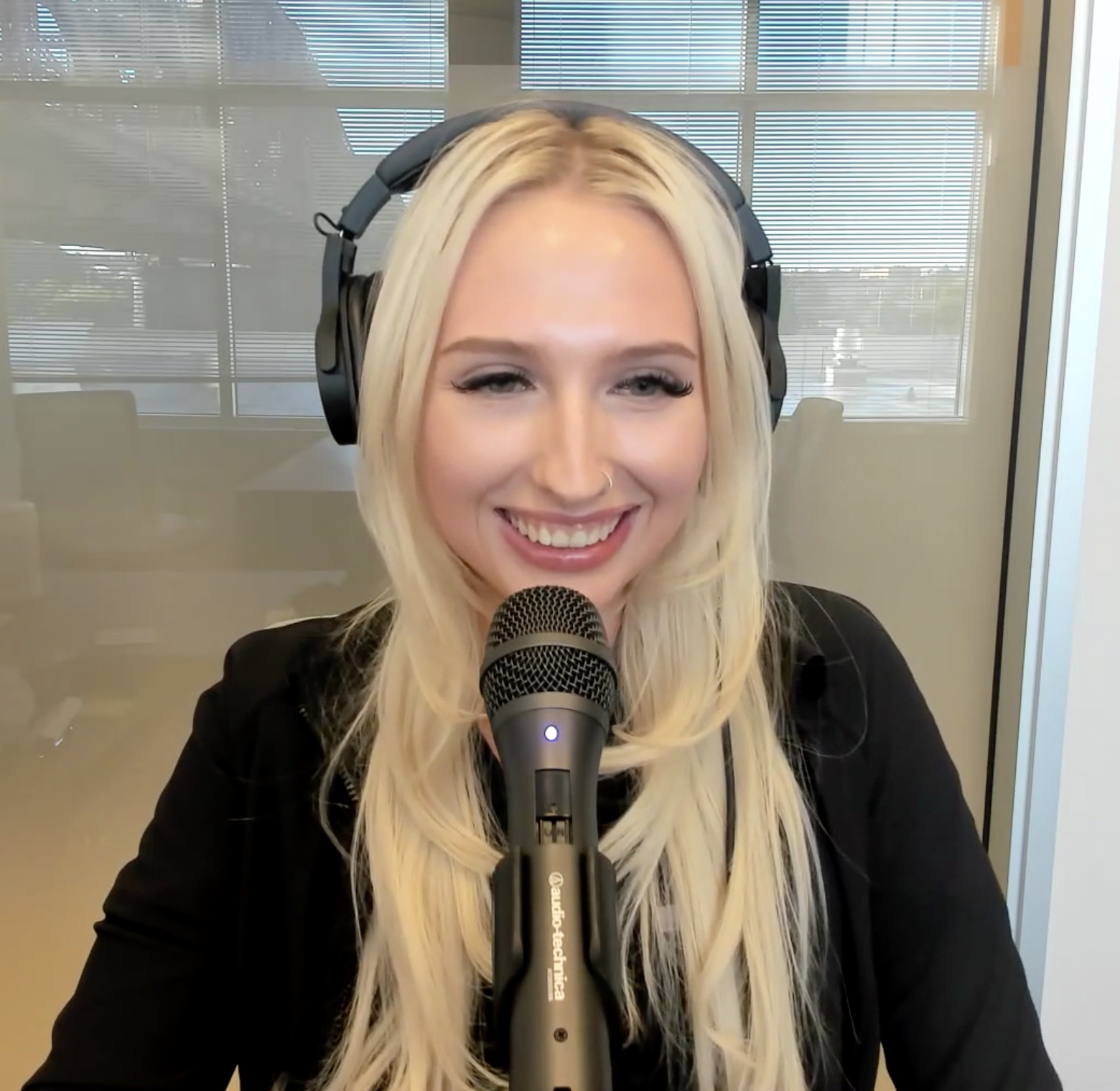
Advanced Aesthetician
Advanced aesthetician Mary Ann Faulhaber’s journey began in waxing, but she quickly fell in love with the science of skin and the confidence that comes from real results.
With over seven years of experience, Mary Ann specializes in advanced technologies like IPL, RF microneedling, and laser resurfacing. Her approach is all about empathy and education. She listens first, focuses on what truly matters to each patient, and never turns a non-issue into a problem.
Working alongside aesthetic nurses and plastic surgeons, she thrives in a collaborative, high-level medical setting where artistry meets science. Known for her warmth, humor, and calming touch, Mary Ann makes every visit feel as comfortable as it is transformative.